
The last piece of the electrification puzzle.
Case Study · Air-Source Heat Pump · Evanston
Year-round electric comfort for a 1923 Evanston bungalow
Bosch IDS Ultra
Dual-zone ducted
−13°F rated
100% electrified
A century-old home, fully committed to electrification: missing one piece.
THE CHALLENGE
Ryan's 1923 Evanston brick bungalow was already well on the way to full electrification, solar panels on the roof, an EV charger, electric appliances, and a tankless water heater. But there was one critical piece left: replacing two aging gas furnaces with a clean, efficient, all-electric heating system.

The home presented a classic North Shore challenge: a century-old structure with complex geometry, limited duct access, and the kind of character that rules out anything invasive. The solution needed to deliver genuine cold-climate performance without compromising the home's integrity or requiring new duct runs.
THE SOLUTION
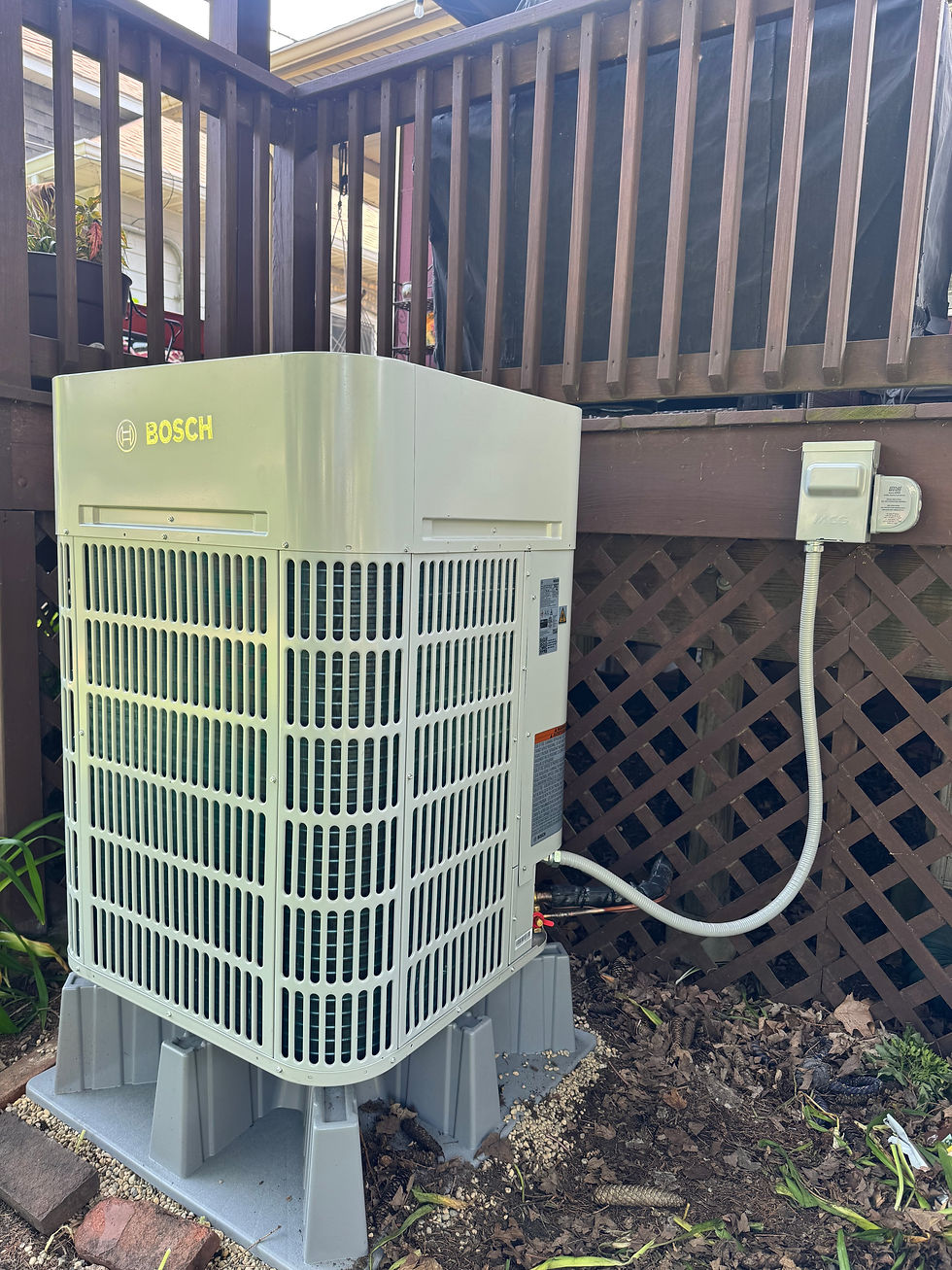
Dual-zone Bosch IDS Ultra: two old furnaces and A/C units out, one heat pump in.
We designed a dual-zone system using a Bosch IDS Ultra cold-climate heat pump, an inverter-driven system rated for continuous heating down to −13°F. One outdoor unit serves the home's two existing HVAC zones, replacing both aging gas furnaces and air conditioners with a single high-performing system. No new duct runs required.
Heat Pump
Bosch IDS Ultra
Cold-climate inverter-driven heat pump with variable-speed compressor. Rated for continuous operation to −13°F with backup electric strip heat available. Delivers precise capacity modulation for maximum efficiency and room-by-room comfort.
Configuration
Dual-Zone Ducted
Each unit serves one of the home's two existing zones via the original ductwork. Matched air handler with variable-speed blower ensures even airflow distribution. Gas service decommissioned at completion.
WHY THE BOSCH IDS ULTRA
Purpose-built for cold-climate electrification.
The Bosch IDS Ultra's inverter-driven compressor modulates output continuously rather than cycling on and off: tighter temperature control, lower energy consumption, and significantly quieter operation. At −13°F it still delivers rated heating capacity. For a homeowner who had already invested in solar, battery storage, and an EV, it was the logical final step: eliminate the last source of on-site combustion.
-
Continuous heating to −13°F: minimal backup heat needed
Dual-zone coverage from existing ductwork: no soffits, no new runs
Variable-speed inverter for precise, comfortable heat delivery
Eliminates all on-site fossil fuel combustion
Quieter than the furnaces it replaced
THE PROCESS
Four steps, no surprises.
01
Energy audit & load calculation
Full Manual J heating and cooling load analysis for each zone. Evaluated the existing duct system, insulation levels, and air sealing to determine precise equipment sizing: not a rule-of-thumb guess. Identified insulation opportunities and right-sized the system for actual demand, not industry rule-of-thumb oversizing.
03
Installation
Removed both gas furnaces. Installed Bosch IDS Ultra outdoor unit and air handler, zone controller, bypass humidifier, and indoor air quality equipment. Connected refrigerant lines, electrical, and controls. Recommended and completed targeted insulation upgrades before system design, reducing heating load and enabling a smaller, more efficient heat pump to handle the full capacity.
02
System design & electrical prep
Designed to maximize the existing duct infrastructure. Installed new electric conduit to support electric strip backup heat.
04
Commissioning & optimization
Full system commissioning with verified airflow, refrigerant charge, and performance data across both zones. Thermostat integration tested for seamless daily operation alongside solar and battery management.
What this project teaches
If your furnace and A/C are both near the end of life, don't replace them one at a time without looking at the whole system. A cold-climate heat pump may be able to handle both jobs, especially when the ducts, controls, and electrical work are planned together.